SOFT SENSES – HARD RESET
Bodily surrender in an overwhelming world
“You can’t go on, living like this“
– Rainer Maria Rilke
Lightning strikes. The wave crashes. The clock tolls. Some events happen to us, on both the sunny and shadow sides of life: a broken heart, a missed opportunity, a child being born. A sudden loss, ecstatic love, an unjust decision. Life is overwhelming and inevitably touches us.
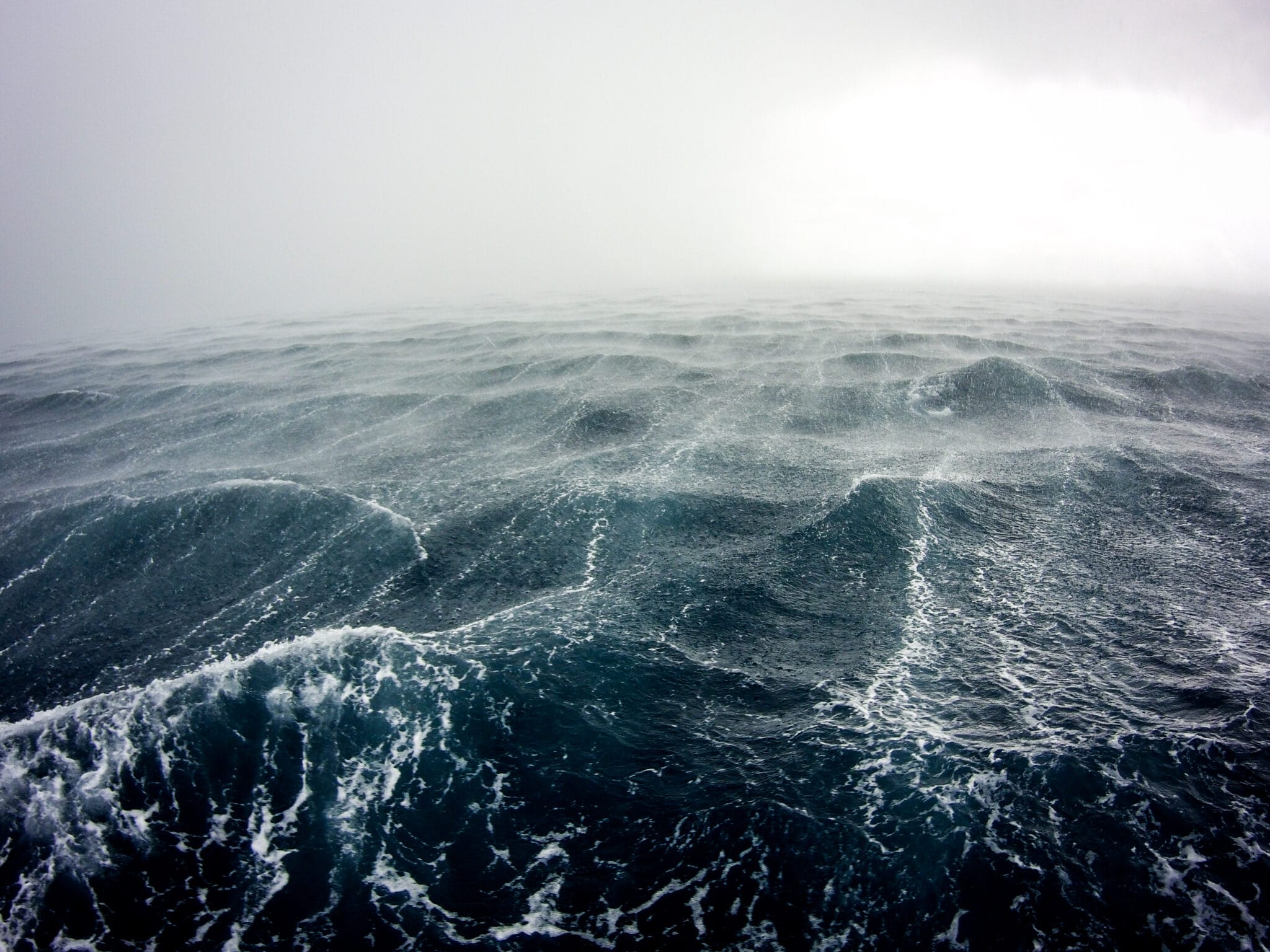
I generally consider myself a lucky person. But after relatively calm years, lightning struck me no less than three times in the past year: a diagnosis, an accident, an encounter. It knocked me off my feet and made me feel how fragile my grip on life really is. The somewhat ordered picture of reality I had until then no longer held. Life happened to me as a force with powers greater and stronger than myself.
I am a fiery person; I always want to move forward. I want to know where I’m going, to have perspective, a goal, a horizon. As if having direction equals having meaning. I had no time at all to be paralyzed, let alone any experience in adopting a receptive attitude in which life could truly touch me. For a long time, I believed I could set my own terms; I had organized my life around control. But the unavoidable task of surrender presented itself. In 2025, my nervous system went into shock, I have walked through life euphorically, and stood screaming in the shower. Lacking a script, I improvised my way of dealing with destruction and recovery. I felt that forcing control would be a futile project, but that passively undergoing everything also made me anxious. I searched for a middle ground—a way that allowed space for loss without losing myself. I realized I lacked the right skills. How do we deal today with what we have no control over? How do we find an attitude toward what overwhelms us? What methods are still common and available in our industrialized society, and are they sufficient? To answer these questions, I think it’s useful first to examine how we deal with crisis in modern society.
The illness lies not only in society, but in the ideology that created it.
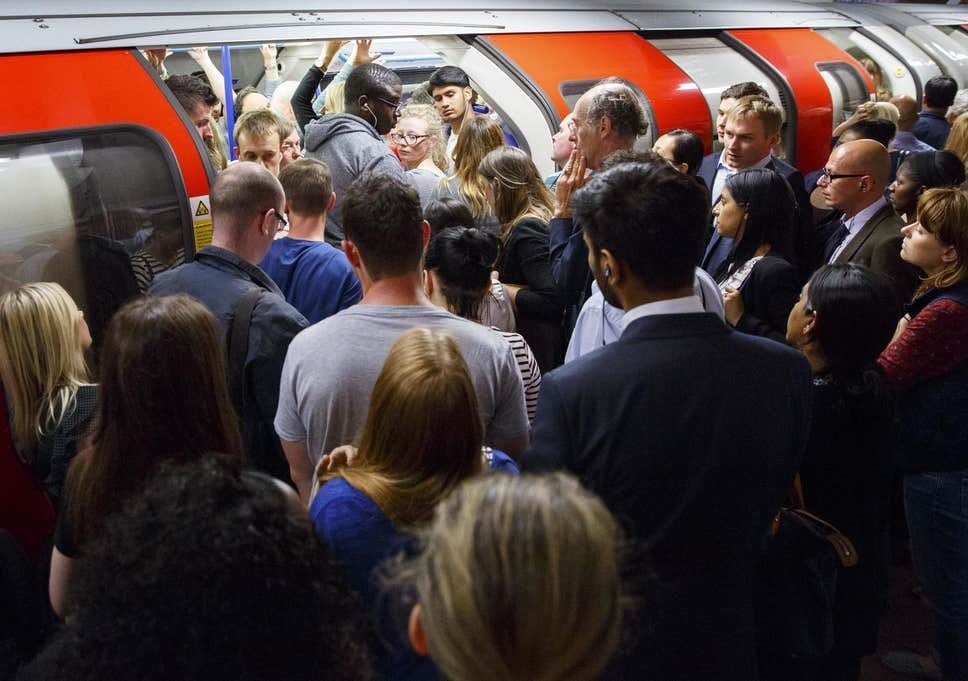
Zooming out for a moment: living as an empathetic, queer, impatient, self-aware, ambitious, jealous, insecure, loving person (in short, everything that makes someone human) in this modern time, with its palpable instability, constant stream of information, unpredictable threats, change, and acceleration, is no small feat. Before you know it, you fall apart every day. Because of the images of melting ice, statistics on abuse, drowned animals, laughing billionaires, violated ceasefires, burned-out megafarms, the loneliness of your parents. Not only life itself, modern society as such is overwhelming. Look around you. Look within. You know it.
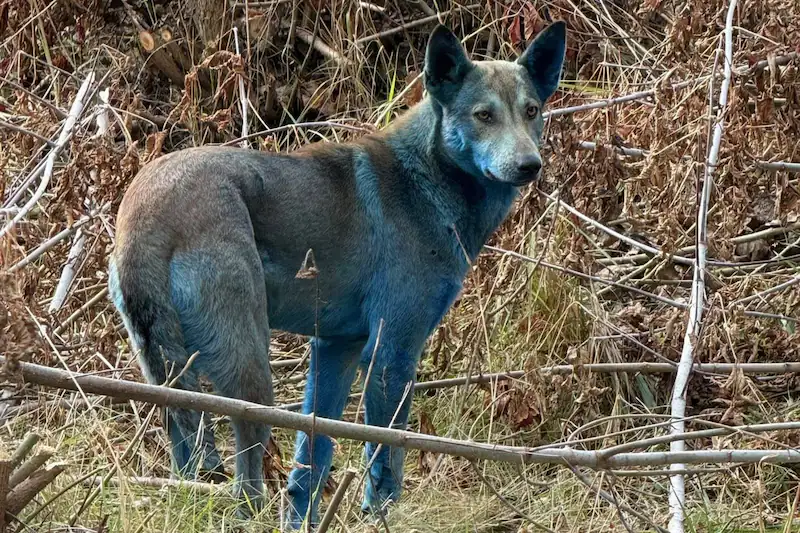
Looking around in this world has become a paralyzing and disorienting experience. The illness lies not only in society, but in the ideology that created it. For a long time in the West, we lived with the idea that life is malleable. Whoever works hard enough and uses their “reason” can shape the world (and other peoples and continents) to their will. Understanding the world and grasping it became extensions of one another. Nature became agriculture, society something we could manage, our own “life plan” something we could execute. The American Dream, the strategy of control. But that drive for control requires silencing others and turning them into objects: your environment, nature, other people, they must not talk back. That strategy now seems to be turning against us. The biosphere responds to the exploitation of nature with a climate crisis, the welfare state became a risk society, security of existence a relic of the past. The idea of the human as a rational being in a controllable society seems bankrupt. We have lost ourselves, and with that, hope for the future. Cultural and ecological collapse first emerged subtly and symptomatically, but is now also visible and tangible.
Yet an alternative way of relating to the world around us still seems absent, at least in the broader, visible society. In response to this intangible yet culturally felt identity crisis, the world appears only to harden and alienate further. We stabilize by accelerating, technology offers efficiency without meaning, and our daily reality becomes disorienting: children perform their personalities for cameras, deepfakes undermine our trust in what is real, AI drones are detonated in hospitals. We all know it. And at the same time, as modern people, we are taught that to have control and to matter, we must accelerate, control, produce, and dominate. Our way of dealing with crisis is one of control.
Life will get you.
This is not a particularly original analysis. Sociologists, philosophers, and artists have been reflecting for decades on the dangers of an industrialized world in which there seems to be no room left for the meaning of our existence. I consulted many of them over the past year, searching for wise counsel. What skills have we lost and must we redevelop if not only life itself but also the world we live in is overwhelming? Life will get you. We remain human. And if life doesn’t catch up with you, society will, confronting us daily with threats. You better stock up your emergency kit.
If I’ve learned one thing this past year, it’s that when you are confronted with something far greater than yourself, the urge to control and resist often creates more pain than it relieves. Yet the industrialized world we live in stimulates precisely this human reflex towards control, which gives us the illusion of mastery. I think it’s time we learn to break that reflex. To show ourselves that it can be different, and how beautiful that can be.
What happens if the way we respond under pressure is radically different from what we’ve always done? What if we don’t fight harder, but become softer? What if we feel the extreme pressure of the threatening biosphere around us instead of continuing to desperately try to escape it, hide it, extinguish it, solve it, deny it, or outsmart it? What if control doesn’t save us, but prevents us from feeling what we already know?
I believe it’s time for a hard reset. Back to factory settings. How do we surrender to something greater, and what happens afterward?
The surface of our sensitivity must expand.
Fully surrendering to the forces of the world and passively enduring what happens to you creates anxiety. Wanting to control and micromanage everything doesn’t seem like a sustainable alternative either. Both strategies risk nihilism and raise the question of what meaning our lives still have if we are merely playthings of fate or rulers over it. What are the alternatives? Sociologist Hartmut Rosa coined the term “resonance”: a layered, reciprocal attunement with what surrounds us. Rosa describes it as “a mode of relating to the world in which subject and world touch and transform each other.” A relationship, then, in which subject and world respond to one another. What I find beautiful about resonance is that such a relationship only arises if you no longer have to impose meaning on the world, as we have long done in the West, but instead experience that the world ís meaningful. Only then can the world speak to you.
I see resonance as an exercise in recalibrating our humanity, a method that reminds us that we are not the supreme power, but part of something here on earth. And in doing so, the world itself can catch her breath. But resonance requires not only the ability to listen, but also to offer resistance. We must want something ourselves. We must stand for who we are and be sufficiently “closed” if we are to give resonance, to serve as a sounding board.
Resonant experiences give our lives meaning: feeling a deep connection with someone where everything flows naturally, being fully absorbed in music, feeling one with nature, surfing a wave. For a moment, we merge with the world around us, on the same wavelength. It places us in perspective without paralyzing us. It is intimate, vulnerable, and for me a form of beauty. It offers comfort and hope. It shows me that our human experience is enough, that we as humans are worthy of trust, that life is about more than just ourselves. It is therefore also an ethics of attunement. To learn to move and resonate within a field of forces, we must become sensitive to our environment. The surface of our sensitivity must expand. As an artist, I advocate for the senses here, not by overstimulating them, but by stripping away layers: seeing more sharply, listening more precisely, feeling more attentively. It teaches us how to live.
The key question is whether we are open to changing after what has happened to us.
But what about crisis? Can we resonate when life overwhelms us in a negative way? In my experience, some events are so overpowering that it doesn’t matter how inventive or sensitive you are; sometimes we are simply powerless, unable to set anything into vibration. My creative talent helped me search for a new relationship to what happened to me, but it also sometimes felt forced. What truly resonated with me was the advice of ethicist Frits de Lange. He writes that in such overwhelming situations, the key question is whether we are open to changing after what has happened to us. “The event itself is unavoidable; it asks to be integrated into your life in such a way that a new balance arises between you and your changing environment. You cannot go on as if nothing has happened.” Learning to resonate thus also requires a certain courage. You must dare to change, be willing to become someone you have not yet been. And that process precedes the creation of reciprocal, meaningful relationships.
Sometimes, then, we must first transform ourselves, recalibrate who we are and discover what we stand for before we can enter into relationship with the world, our environment, or others. That process can take time and requires accepting that life is sometimes inherently overwhelming. If we allow ourselves to be carried along and remain open to change, space for a reset emerges. Ideally, we go through that process with as little collateral damage as possible- for ourselves and our surroundings. And anyone with a bit of life experience knows: that is no easy task. The acceptance and surrender required are skills in themselves, skills we have largely unlearned in modern life. Yet we must. I found inspiration in the practice of freediving, where pressure, surrender, world, and body come together, it is a metaphor for surrender and an excellent training in resonance.
Freediving is a form of diving in which one descends to great depths on a single breath and returns again. Experienced divers experience a “free fall” from about 30 meters underwater; the pressure pushes them deeper into the ocean. “It’s like being swallowed by the ocean, becoming part of it,” says freediver Alessia Zecchini. Freediving exerts extreme pressure on the body: the lungs shrink to the size of a fist, the heart rate drops to 10 beats per minute. Underwater, it grows darker and darker. Yet many freedivers report being highly focused and intensely happy during their dive. It is vital for these divers to remain relaxed at great depths, both physically and mentally, to let the ocean do its work. The most dangerous thing you can do in your free fall, under extreme pressure, is panic. Here I find a parallel with an overwhelming outside world and the overwhelming nature of life: freediving shows that under pressure we can surrender, remain receptive, allow ourselves to be carried by forces greater than ourselves, and that by consciously relaxing, we can remain autonomous. We “respond,” as it were, to the overwhelming world. This yields an experience of the sublime, enables incredible performance, brings intense happiness, and calls into question the importance (and efficiency) of our urge to control.

I meditated endlessly; no breathing exercise helped.
Freediving thus shows something counterintuitive yet valuable: that sometimes the world takes the lead, that the body can guide us in surrender, and that conscious surrender is also a form of response. But all that is easier said than done. During my freedive training in ‘The Blue Hole’ in Egypt, I experienced how incredibly difficult it is to relax under pressure. Despite (or perhaps because of) my athletic background, I simply couldn’t do it. Quite a hit to the ego. To allow the ocean’s pressure to compress your body, your body must be available for it; a soft, relaxed body is essential. I could control and direct my body, but not surrender it. My diaphragm was constantly tense, rigid, preventing the ocean from doing its work. It couldn’t compress my lungs. When, after six days, I was still stuck at the 20-meter limit, I began to wonder where all that tension in my body came from. I meditated endlessly; no breathing exercise helped. It felt bigger than me. The daily micro-aggressions, constant threat, and chronic urgency of modern society, combined with the residue of the overwhelming experiences of the past year, seemed to have settled into my flesh. I was stuck. No resonance for me. The reset we need seems not only mental, but also physical and sensory. I eventually took the time to slow down, soften my body, and undergo a hard reset. I’m not quite there yet, I am still becoming, but slowly I see a new horizon emerging, one I will approach with greater sensitivity to my surroundings.
Away from the familiar, everyday world into an unknown, horizonless blue environment.
I have rarely been as happy in my work as a choreographer and philosopher as in recent months. I have the privilege, together with my team, to transform experiences from the outside world and my inner world into creation, alchemy, resonance. Ultimately, this led me to create Vertical Blue: an immersive dance performance about surrender and the sensory resetting of our bodies in an overwhelming world.
In Vertical Blue, as an audience member, you make your own freedive, away from the familiar, everyday world into an unknown, horizonless blue environment. That sounds thrilling, and it is. But in this process, you don’t actually have to do anything; you are carried, by the performers, by the changing environment, the light, the sound, and above all by the increasing pressure created by the combination of these elements. It’s like being swallowed by the performance.
I believe that if we can do this, if we can surrender to these forces, in the theater, but also in the ocean, in a waiting room, on a date, in life in general, we return again and again to our shared humanity. Our place in the cosmos. Aligned, recalibrated. And that gives us something. I am convinced that in that place, insights and sensations emerge that make life worthwhile. That give us the hope we so long for and provide clarity in an uncertain, polarized world. From there, we can truly determine new, aligned steps.
Perhaps the conclusion of this essay is simpler than expected. Perhaps sustainably dealing with crisis today lies not in more thinking, writing intellectual essays, or achieving athletic diving feats, but in cultivating different qualities, both within myself and in my audience:
Receptivity.
Attunement.
Vulnerability.
Love.
For that, we must dive deep and let everything go, not out of indifference, but to open our hands, eyes, and thoughts to what cannot be held or controlled. We are heading towards a hard reset at the bottom of the ocean, only to rise again together, forming an alternative response to an overwhelming world.
The act of surrender.
We better get ready.